As Toronto’s office market evolves, aging buildings are finding new relevance. The opportunity isn’t necessarily to make them feel new. It’s to make them worth choosing.
For years, the hierarchy of Toronto’s commercial real estate market seemed relatively straightforward. Newer was better. Class A towers offered the prestige, technology and amenities that attracted major tenants, while older buildings competed largely on location and price. That hierarchy is becoming more nuanced. A continued flight to quality has put pressure on Toronto’s premium office inventory, while rising costs are encouraging some tenants to widen their search. At the same time, the expectations of the workplace have fundamentally changed. Employees need a reason to make the commute.

Today, we’re seeing landlords make much more meaningful investments in amenities and public spaces. There’s a recognition that these experiences can draw attention back to an older asset.
Eric Yorath, Principal at Figure3
Employers are looking for spaces that help attract people back to the office. And landlords of older assets are recognizing that the right investment can change how a building is perceived. “Ten or fifteen years ago, a landlord might have converted an unused ground-floor suite into a basic meeting room because it was otherwise wasted space,” says Eric Yorath, Principal at Figure3. Building classifications still matter, particularly for organizations where a premium address is closely tied to brand, stature and talent strategy. But for many tenants, the decision is becoming more layered.
Location remains critical. So do cost, natural light, efficient floorplates and access to transit. Increasingly, though, tenants are also asking what the office can offer that home cannot.
Employees are no longer comparing one office with another. They’re comparing the experience of going to work with the experience of staying home. Is the technology better? Are there places to collaborate, focus or connect? Can I grab a coffee, step outside or meet a colleague somewhere that doesn’t feel like a boardroom? For employers, that changes the equation.
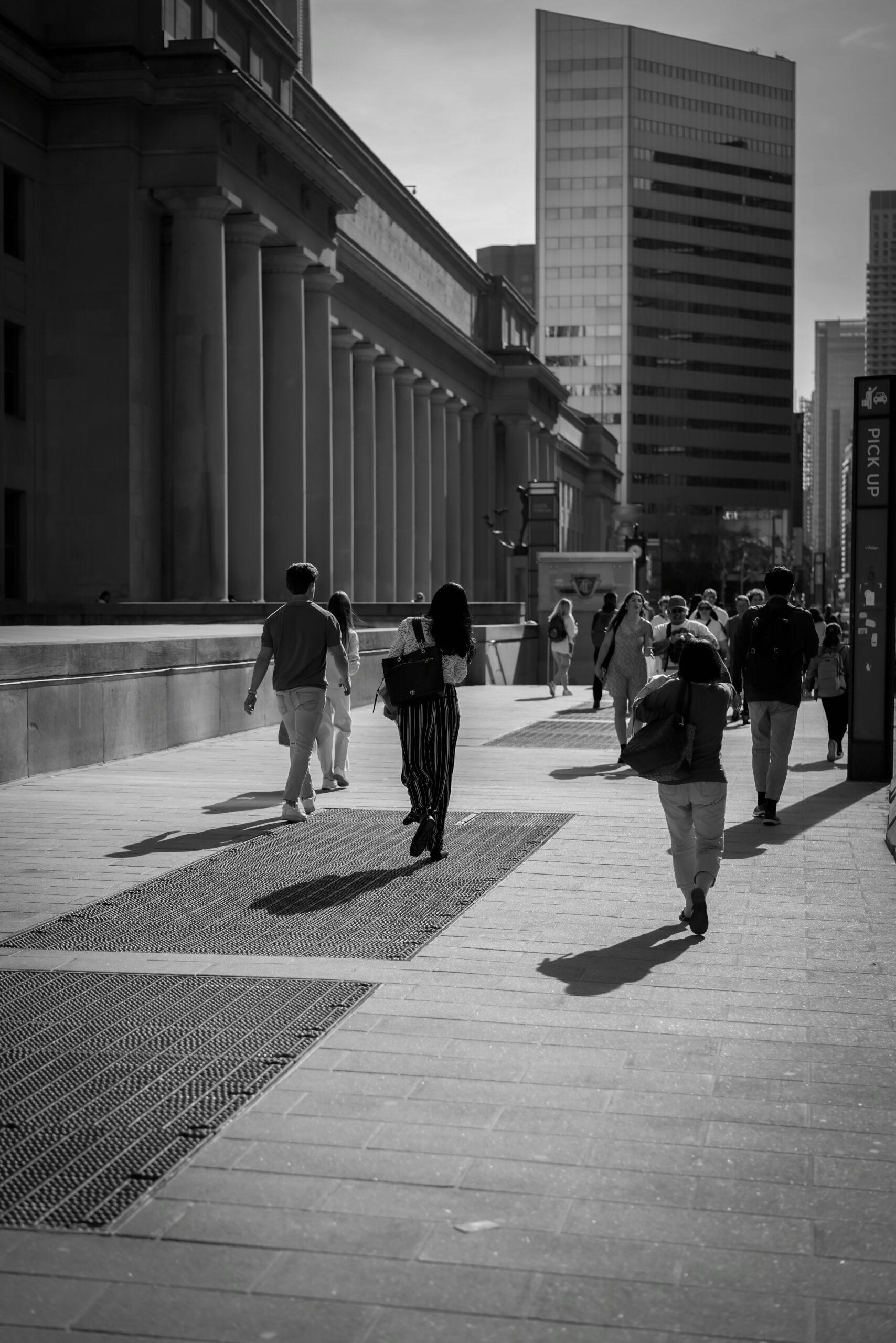
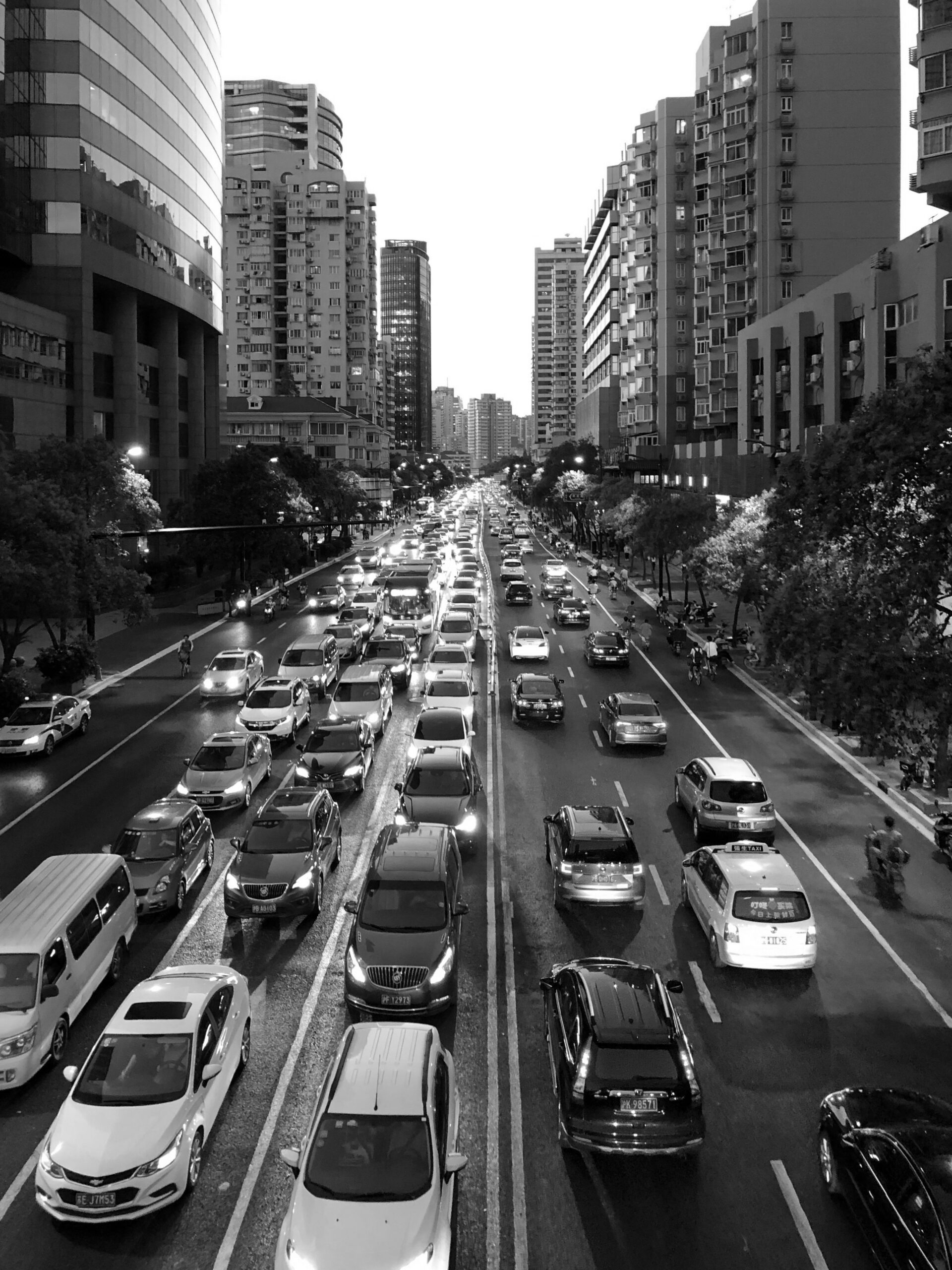
In Toronto, employers have to buy the commute. The quality of the workplace, including the building itself, has to compensate for the effort employees make to get there.
Eric Yorath, Principal at Figure3
For Class B landlords, this creates both a challenge and an opportunity. Tenants considering older buildings may benefit from lower rents, tenant improvement allowances, turnkey buildouts or other incentives. Those economics can create room to invest differently, directing more of the available budget toward the workplace itself. For the right tenant, a thoughtfully designed Class B environment can offer an experience that competes with, or even surpasses, a more modest space in a premium tower.
And older buildings don’t necessarily need to replicate the newest developments. In some cases, their advantage lies in offering something entirely different. Many older buildings contain qualities that are difficult to manufacture in new construction: unusual ceiling heights, industrial character, generous floorplates, terraces, rooftops and architectural details that reflect another era of the city. The challenge is recognizing their potential.
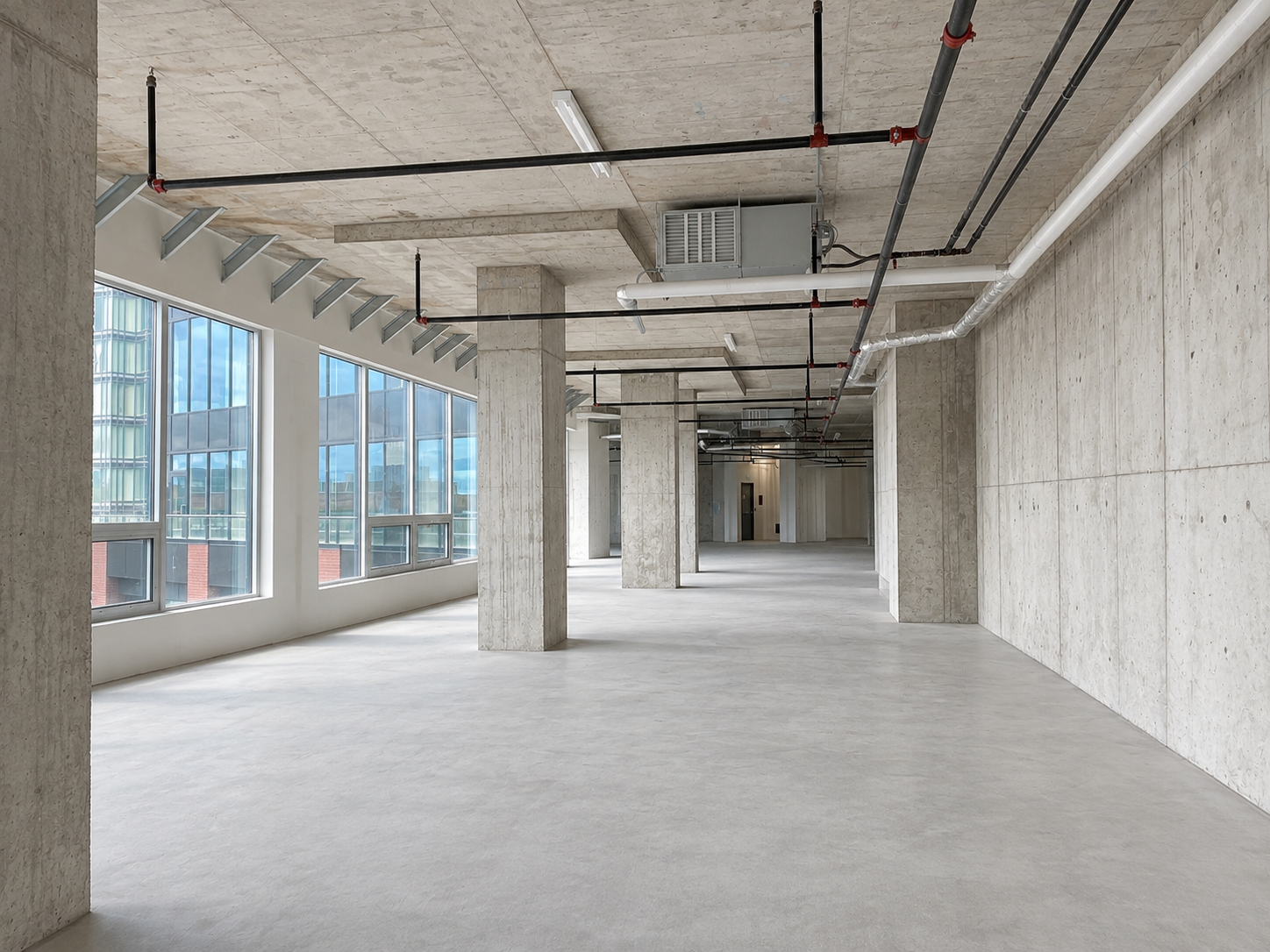
That shift in perspective can change the conversation from overcoming an older building’s limitations to identifying the opportunities hidden within it. The question is no longer simply, How do we make this building feel newer? It’s What can this building offer that others can’t? Spend where people feel it.
Repositioning an older asset doesn’t necessarily mean transforming every square foot. In fact, one of the biggest misconceptions around Class B repositioning is that competing with Class A requires Class A levels of capital investment.
The greatest opportunity is often not to spend more, but to spend strategically. The most successful interventions are highly visible, highly experiential and aligned with what today’s tenants actually value.
Suzanne Wilkinson, Principal at Figure3
For landlords of older buildings, that distinction matters. Significant capital may already be directed toward the things tenants rarely see. HVAC, plumbing, technology, washrooms and other base-building systems are essential to keeping an asset operational and competitive, but once those costs are accounted for, there may be limited capital left for the elements people actually experience.
Design can help determine where that remaining investment will have the greatest impact. A dated lobby can be reconsidered through lighting, furniture, art, finishes, signage and branding rather than complete reconstruction. Underused common areas can become places to meet, work or socialize. Amenity spaces can introduce hospitality, warmth and a stronger sense of identity. First impressions carry weight. An outdated arrival experience can influence a prospective tenant’s perception of an entire property before they ever see the available suite.
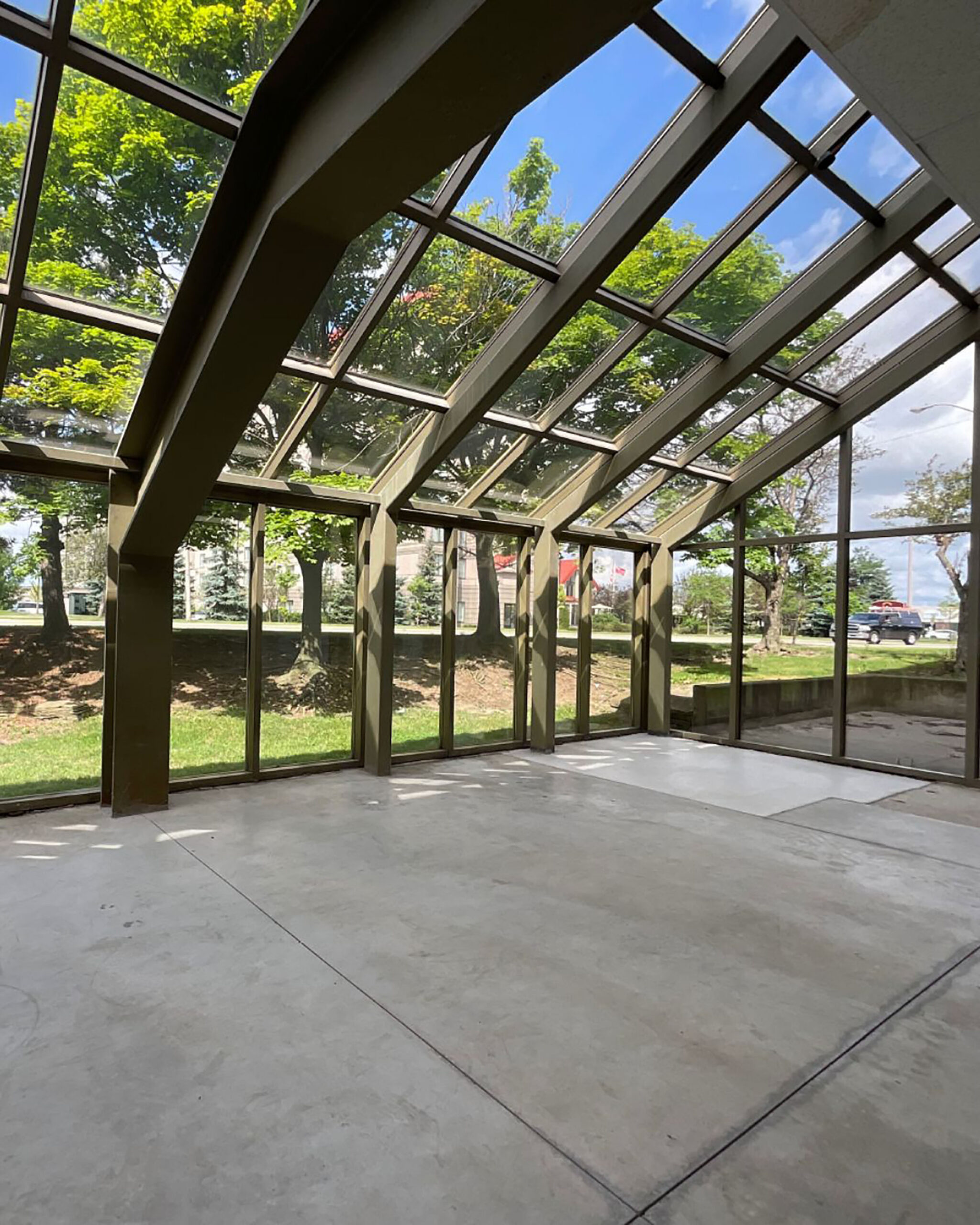
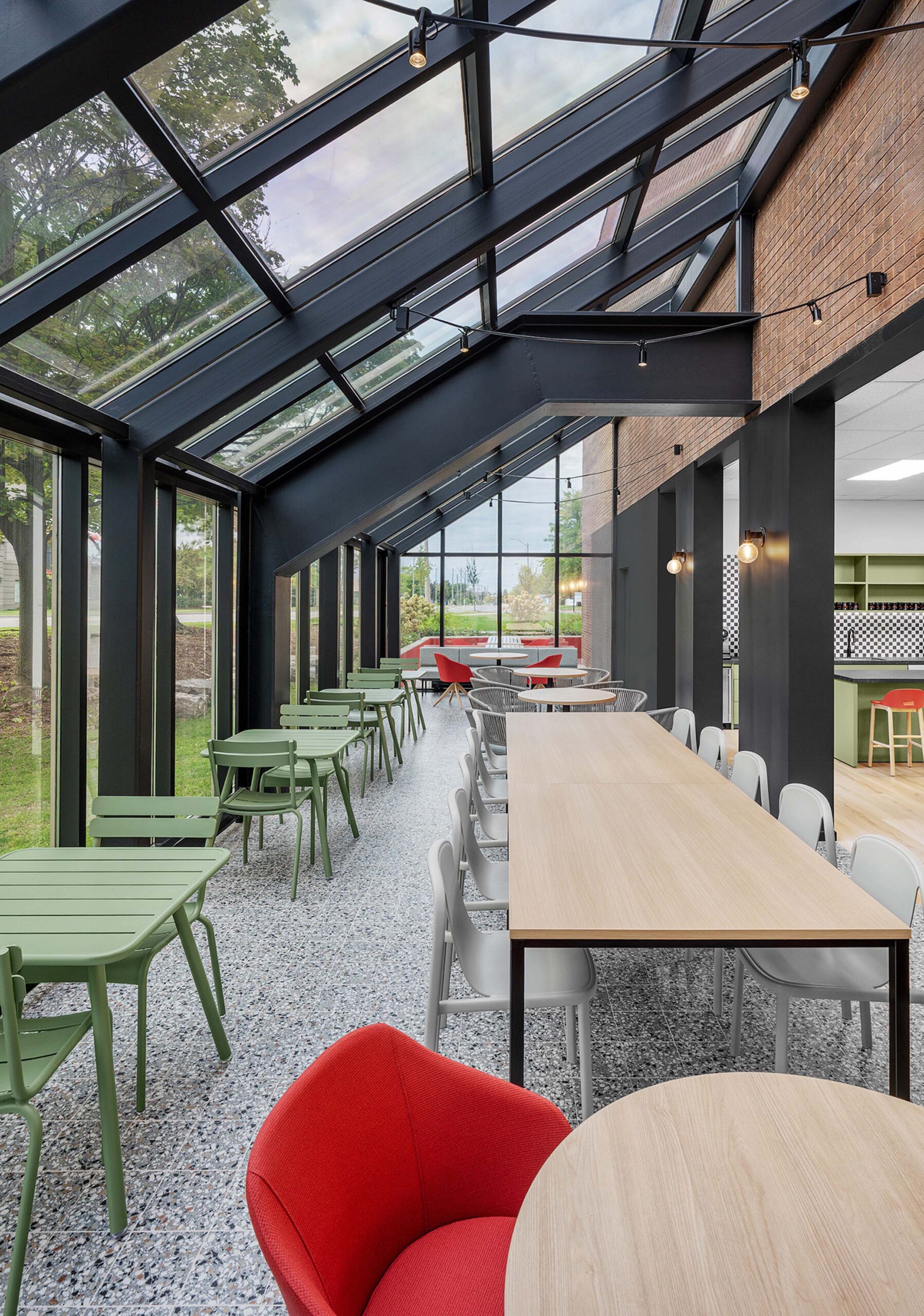
One of the most compelling opportunities may be outside. Access to outdoor space has become increasingly important to tenants, yet it can be difficult to accommodate in many premium downtown towers. Older buildings may have overlooked exterior spaces that can become genuine points of differentiation. This is also why involving a designer early, even during the leasing process, can be valuable. Rooftops, patios, terraces, courtyards and even underused parking areas can potentially support outdoor amenities, creating places for employees to work, gather, take a break or simply step away from their desks. They don’t need to compete with elaborate amenity floors. They need to offer something meaningful.
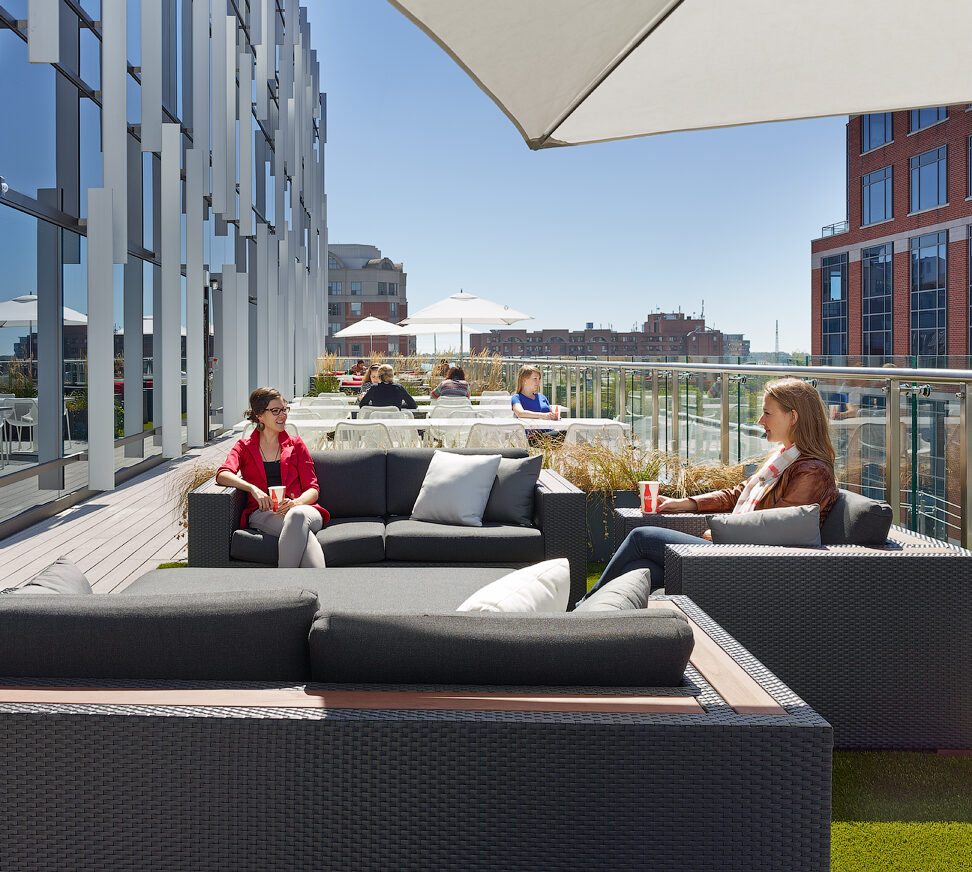
As the line between workplace and hospitality continues to blur, access to fresh air, greenery and informal social space can become a significant part of the employee experience. What once looked like leftover space may become one of an asset’s strongest features.
Older buildings can offer another valuable quality: adaptability. Rather than forcing a current workplace model into an existing structure, designers can work with a building’s floorplate, servicing and architectural conditions to create a flexible framework.

A kit-of-parts approach, using repeatable planning elements, furniture systems, meeting spaces and workplace typologies, can allow spaces to be configured differently as tenant needs evolve. Instead of undertaking significant construction every time an organization changes, the underlying workplace is designed to adapt.
This protects the landlord’s investment while giving tenants greater freedom to make the space their own. It also reflects a broader change in how office space is being used.
Technology has dramatically reduced the amount of space once dedicated to filing rooms, storage and large server rooms. That square footage can now be returned to people through social spaces, collaborative environments, focus areas and shared amenities. The workplace is no longer simply a collection of desks. Increasingly, tenants are looking for environments that feel less conventionally corporate and more welcoming, social and human.
Ultimately, successful repositioning is about more than aesthetics. A refreshed lobby cannot compensate for poor building systems, an inaccessible location or an asset that hasn’t kept pace with tenant needs. But when the fundamentals are there, thoughtful design can change perception, broaden the potential tenant pool and help people see possibilities they might otherwise overlook.
For landlords, that means evaluating design not simply as a cost per square foot, but in terms of the value it can unlock. There is also a larger idea at play.
In The Death and Life of Great American Cities, Jane Jacobs wrote, “Life attracts life.” The observation was about cities, but the principle translates remarkably well to today’s workplace. Successful buildings don’t become desirable simply because they have been renovated.
That is placemaking at the scale of the office building. For Toronto’s Class B stock, the opportunity isn’t to disguise age or compete with Class A buildings entirely on their terms. It’s to recognize the potential already there, invest where it matters and create places people actively choose to be.
The future of the office may not belong exclusively to the newest buildings. It may also belong to the ones we learn to see differently.


